



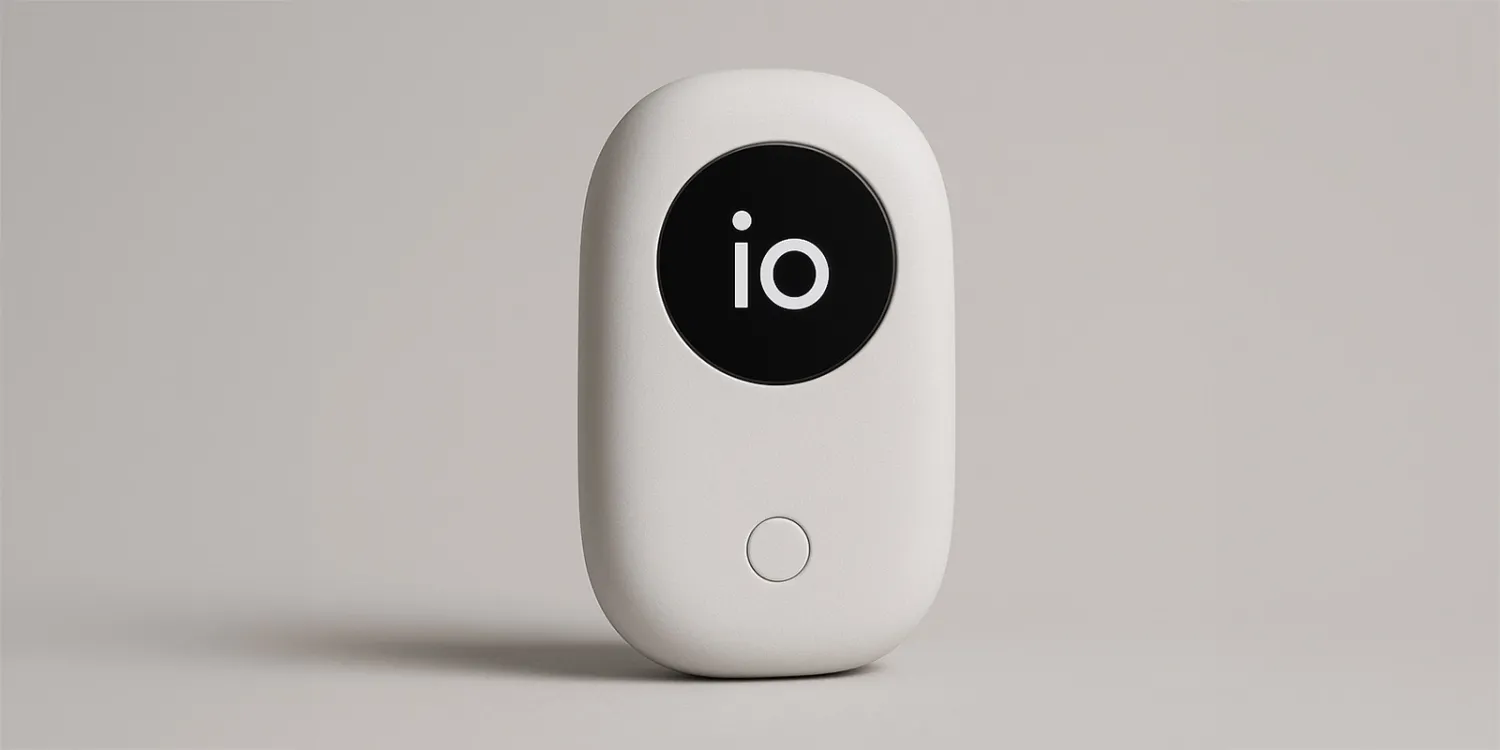

One of the most influential product designers in modern technology, Jony Ive, is once again at the center of industry attention—this time for his role in developing a new generation of AI-powered hardware.
Working in collaboration with OpenAI and its CEO Sam Altman, Ive is reportedly leading the design of a completely new type of consumer device, one that could redefine how humans interact with artificial intelligence.
A Vision Beyond the Smartphone
For decades, computing has revolved around screens—desktops, laptops, and smartphones. But Ive’s latest project aims to move beyond this paradigm.
Reports suggest the device is being designed as a “post-smartphone” product, potentially becoming a third core device alongside laptops and phones.
Rather than focusing on apps and touch interfaces, the concept emphasizes:
- Voice-first interaction
- Ambient, always-available AI
- Minimal or no screen at all
This reflects a broader industry shift toward AI-native hardware, where the interface is conversational rather than visual.
What We Know About the Device So Far
While official details remain limited, multiple reports and leaks provide a clearer picture of what Ive and OpenAI are building.
Key rumored characteristics:
- Screenless design
The device may eliminate traditional displays entirely, relying on voice and contextual awareness. - Pocket-sized or wearable form factor
It could be small enough to carry in a pocket or wear around the neck, similar in size to compact music players. - Context-aware intelligence
Built-in microphones and possibly cameras would allow it to understand surroundings and user behavior. - Always-on AI assistant
Powered by advanced models, the device would enable continuous, natural conversation with AI. - Integration with existing devices
Rather than replacing smartphones, it may complement them—acting as an intelligent layer across devices.
In essence, the product is being designed as a seamless, invisible interface to AI.



Multiple Concepts Under Development
Interestingly, the project may not be limited to a single device.
Reports indicate that Ive and OpenAI are exploring a family of AI hardware products, including:
- A smart speaker with advanced AI capabilities
- A pen-like device capable of capturing and processing handwritten input
- Potential future concepts such as AI-enabled accessories or ambient devices
One prototype, reportedly codenamed “Gumdrop,” has been described as an AI-powered pen that can transcribe notes and interact with AI in real time.
This multi-device approach suggests a broader ambition: creating an ecosystem of AI-first hardware, not just a single flagship product.
The “Anti-Phone” Philosophy
At the heart of Ive’s design philosophy is the idea of an “anti-phone.”
Unlike smartphones—which demand constant attention—this new category of device aims to:
- Reduce screen time
- Minimize distractions
- Provide calm, focused interaction
Recent commentary highlights the goal of giving AI a “physical presence” without overwhelming users, potentially redefining how technology fits into daily life.
This approach aligns with growing concerns about digital overload and the desire for more human-centered technology experiences.
Why This Matters: The Race for AI Hardware
The collaboration between Ive and OpenAI comes at a critical moment.
The tech industry is actively searching for the defining device of the AI era, similar to how:
- The PC defined the 1980s
- The smartphone defined the 2000s
So far, attempts like AI pins and standalone assistants have struggled to gain traction. Ive himself has criticized earlier products for lacking innovation.
This creates a significant opportunity:
- If successful, this device could establish a new computing category
- If not, it risks becoming another niche experiment
Challenges Ahead
Despite the excitement, developing a new AI device category is extremely complex.
Key challenges include:
1. User Adoption
Convincing users to adopt a new device—especially one that may replace or supplement smartphones—is a major hurdle.
2. Technical Limitations
Creating a reliable, real-time AI system that works seamlessly in everyday environments remains difficult.
3. Privacy Concerns
Devices that constantly listen or observe surroundings raise serious questions about:
- Data collection
- Surveillance
- User control
4. Market Expectations
With Ive’s reputation for iconic designs, expectations are exceptionally high.
Timeline and Launch Expectations
Current reports suggest:
- A product reveal could happen in 2026
- Actual shipping may occur later, potentially 2027 or beyond
This extended timeline reflects both the technical ambition of the project and the need to get the user experience right.
A Design-Led Approach to AI
What sets this project apart is its design-first philosophy.
Unlike many AI initiatives driven purely by engineering, Ive’s involvement ensures a focus on:
- Simplicity
- Usability
- Emotional connection with technology
This mirrors the approach that helped create iconic products like the iPhone and iPod—devices that didn’t just introduce new technology, but redefined how people used it.
The Bigger Picture: A New Computing Paradigm
If successful, this device could signal a shift toward:
- Ambient computing (AI that fades into the background)
- Voice-first interfaces
- Context-aware systems that anticipate needs
Instead of opening apps or typing queries, users might simply:
- Speak
- Think aloud
- Interact naturally with AI
This would mark a fundamental change in how humans engage with technology.
The reported collaboration between Jony Ive and OpenAI represents one of the most ambitious attempts to define the next era of computing. By combining cutting-edge AI with world-class design, the project aims to create a device that is not just functional—but transformative.
While many details remain unknown, one thing is clear:
the race to build the “iPhone of AI” is underway—and Jony Ive may once again be at the center of it.