


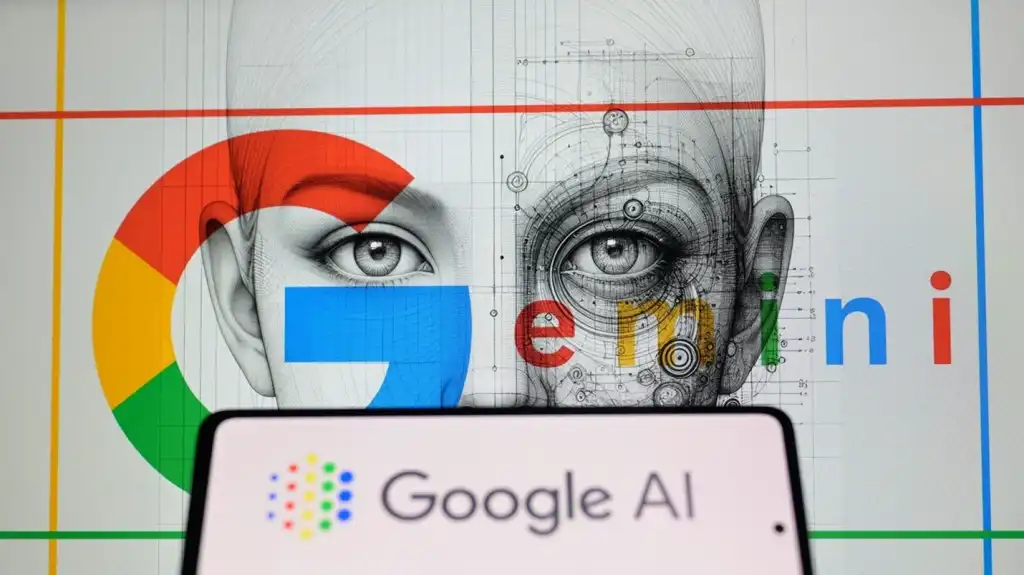

Google is rapidly transforming Gemini from a standalone AI chatbot into a deeply embedded intelligence layer across its entire product ecosystem. From productivity tools and cloud platforms to smart homes and enterprise solutions, Gemini is becoming the central engine powering Google’s next generation of services.
- From AI Model to Full Ecosystem
- Deep Integration Across Google Workspace
- Gemini in the Smart Home and Everyday Devices
- Real-Time AI and Multimodal Capabilities
- Enterprise Adoption and Cloud Integration
- Developer Ecosystem and Open Integration
- Cross-Platform and Third-Party Expansion
- Competing in the AI Platform Wars
- Challenges and Risks
- What This Means for Users
This strategic expansion reflects a broader industry shift toward “AI-first ecosystems”, where artificial intelligence is not just a feature—but the foundation of how software, devices, and services operate.
From AI Model to Full Ecosystem
Originally introduced as Google’s flagship generative AI model, Gemini has evolved into a multi-layered platform spanning consumer, developer, and enterprise use cases.
Recent updates show that Gemini is now:
- Integrated into everyday apps like Docs, Sheets, Gmail, and Drive
- Available through APIs and developer tools
- Embedded in hardware and smart home environments
- Expanding into third-party platforms and enterprise workflows
By early 2026, Gemini has effectively become a unified AI system connecting Google’s entire ecosystem.
Deep Integration Across Google Workspace
One of the most visible areas of expansion is Google Workspace, where Gemini is reshaping productivity workflows.
Google has introduced AI-powered features that allow users to:
- Generate full documents, presentations, and spreadsheets automatically
- Summarize emails and conversations from Gmail and Chat
- Pull context from multiple files in Drive to create structured outputs
These capabilities significantly reduce manual work and enable users to move from idea to execution faster.

More importantly, Gemini connects context across apps—meaning it can understand relationships between emails, files, and tasks, creating a more intelligent and cohesive workspace experience.
Gemini in the Smart Home and Everyday Devices
Google is also pushing Gemini into the physical world, particularly through smart home technology.
- Users can give more natural, descriptive commands (e.g., lighting moods instead of exact settings)
- The system better understands context and device relationships
- Voice interactions are becoming more conversational and intuitive
At the same time, Gemini is expanding into new domains such as AI-assisted shopping, where it can help automate purchasing decisions—signaling the rise of “agentic commerce.”
Real-Time AI and Multimodal Capabilities
A major breakthrough in Gemini’s evolution is its move toward real-time, multimodal AI.
With the introduction of Gemini 3.1 Flash Live, developers can now build systems that:
- Process voice, video, and text simultaneously
- Respond at conversational speed
- Understand tone, intent, and environmental context
This enables a new class of applications, including:
- Voice assistants that feel more human
- AI companions and accessibility tools
- Interactive design and gaming experiences
These advancements position Gemini as a leader in low-latency, real-time AI interactions.
Enterprise Adoption and Cloud Integration
Google is also aggressively targeting businesses with its Gemini Enterprise platform.
Key features include:
- Pre-built AI agents for workflow automation
- Integration with enterprise tools like Google Workspace and Microsoft 365
- No-code tools for non-technical users
- Centralized governance and data control
The launch of dedicated enterprise apps highlights Google’s ambition to make Gemini a core productivity layer for organizations, not just individuals.
Additionally, Gemini models such as Gemini 3.1 Pro are now available through Google Cloud’s Vertex AI, giving companies access to advanced reasoning capabilities for complex tasks.
Developer Ecosystem and Open Integration
A critical part of Google’s strategy is enabling developers to build on top of Gemini.
Through tools like:
- Google AI Studio
- Gemini API
- SDKs for app and service integration
Developers can create custom AI-powered applications across industries—from media and education to logistics and healthcare.
Early adopters are already embedding Gemini into their own platforms, demonstrating how it can serve as a flexible AI backbone for external ecosystems.
Cross-Platform and Third-Party Expansion
Google’s vision extends beyond its own products. Gemini is increasingly being integrated into:
- Third-party apps and services
- Hardware partnerships (e.g., smart appliances)
- Global events and digital platforms
For example, Gemini-powered features are already appearing in connected devices and are expected to play a role in large-scale global events like the 2026 FIFA World Cup through partnerships and integrations.
This approach positions Gemini not just as a Google product—but as a universal AI layer across digital experiences.
Competing in the AI Platform Wars
Google’s aggressive expansion comes amid intense competition from:
- OpenAI (ChatGPT ecosystem)
- Microsoft (Copilot integration across Windows and Office)
- Apple (AI-driven Siri transformation)
Unlike some competitors, Google’s strength lies in its ability to integrate AI across:
- Search
- Android
- Workspace
- Cloud infrastructure
This gives Gemini a unique advantage: native access to real-time data and deeply interconnected services.
Challenges and Risks
Despite its rapid growth, Gemini’s expansion presents several challenges:
- User trust and accuracy: AI-generated outputs must remain reliable
- Privacy concerns: especially with cross-platform data integration
- Regulatory pressure: particularly in AI-driven commerce and automation
- Competition: rivals are advancing quickly in enterprise and consumer AI
Google must balance innovation with responsibility as it scales Gemini across billions of users.
What This Means for Users
For everyday users, Gemini’s expansion will lead to:
- More intelligent and personalized digital experiences
- Less manual work across apps and devices
- Seamless interaction between services
- AI that anticipates needs rather than just responds
For businesses and developers, it means access to powerful, scalable AI tools that can be integrated into virtually any workflow.
Google’s expansion of Gemini across its ecosystem marks a turning point in the evolution of artificial intelligence. Rather than treating AI as a standalone product, the company is embedding it into every layer of its technology stack—from cloud infrastructure to consumer devices.
If successful, this strategy could redefine how users interact with technology, making AI an invisible but essential part of everyday life. Gemini is no longer just an AI model—it is becoming the operating system for the AI era.